


Blog / Enterprise


Holiday shopping is no longer confined to the holiday season, it’s already well underway. This year, 24% of surveyed consumers started their shopping over the summer, up from 13% last year.¹ Advertisers have taken notice: pre-Labor Day campaign launches doubled year over year, rising from 4% to 8%.²
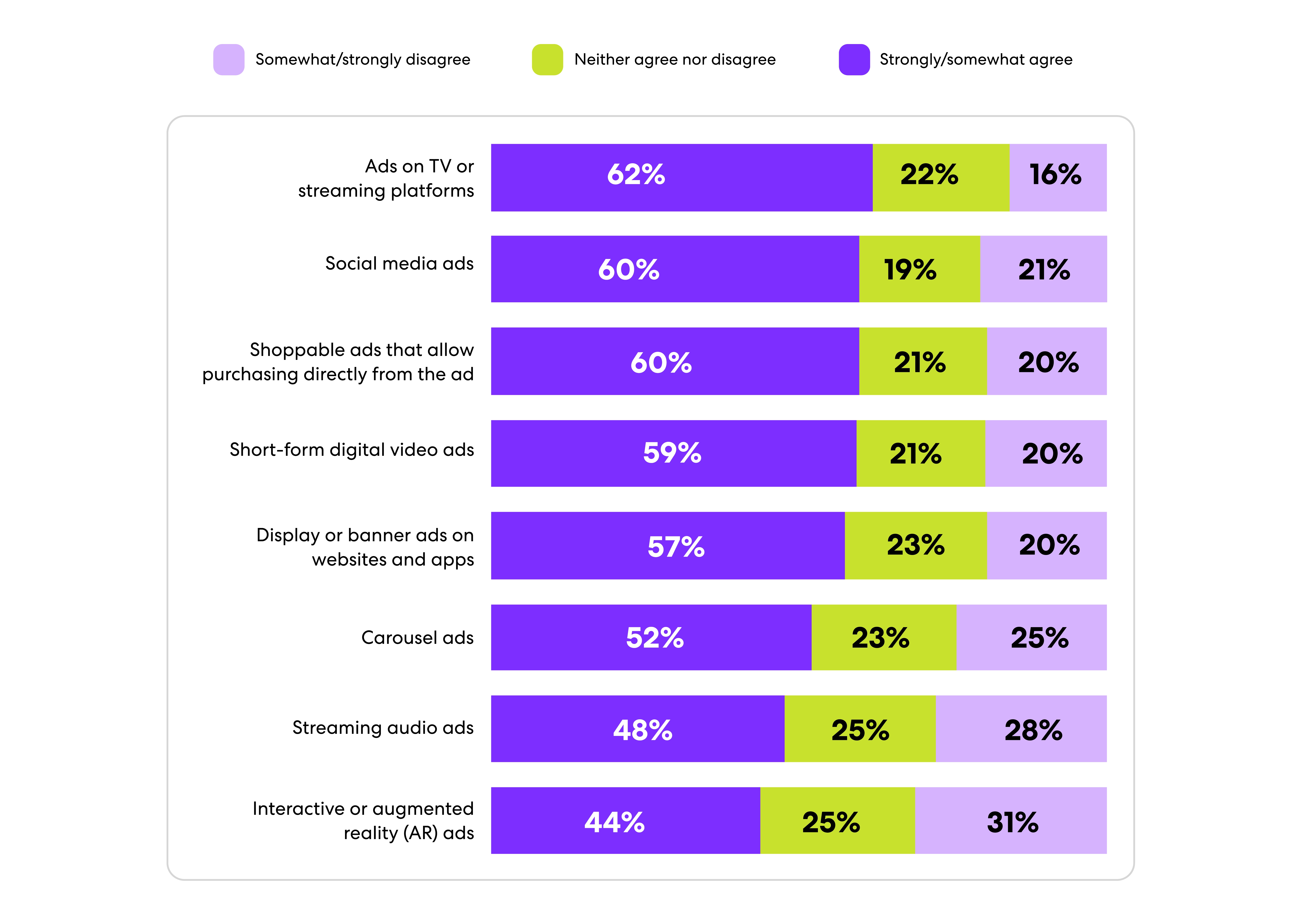
Moving earlier raises the obvious follow-up question: where does that earlier dollar do the most work? Consumers have already made that clear. 62% say TV and streaming ads influence their holiday purchases, making CTV the single most persuasive medium in our survey.¹
Digital Ad Influence on Holiday Shopping
That combination is why 58% of advertisers plan to increase CTV spend this season, up sharply from 45% in 2025.² But the money is moving faster than the measurement. CTV is still widely planned as an awareness buy and reported on weeks after the fact, which is a problem when shoppers start buying in summer and keep buying through the final days before Christmas.
Our position: CTV should be run as a performance channel this holiday season, optimized against real sales while the campaign is still in flight.
Continuous optimization is the only option that fits this season
Holiday buy cycles keep getting longer, and that added length is usually framed as a reason to start earlier. It's also the reason waiting for measurement is so expensive. A campaign that launches in September and reports out in January gives you a verdict on a season that's already closed, and every week spent waiting on a readout is a week of budget you couldn't move. The fix isn't a faster report at the end. It's optimization that runs the length of the season, which means the campaign has to be able to tell, week over week, what's actually working.
Start by resolving exposures to households
You can't optimize against an audience you can't recognize. Continuous optimization depends on identifying the household on the other side of the CTV screen and holding onto that identity as they move between streaming apps, devices, and eventually a checkout.
That's the foundation Yahoo DSP is built on: 90% of Yahoo DSP spend runs on ConnectID-enabled supply,³ which means exposure and outcome connect reliably at scale.
End with outcomes that arrive during the campaign, not after
Once exposures resolve to households, you can connect them to what those households actually bought. That's what In-Flight Outcomes (IFO) does: it ties CTV ad exposures to online and offline outcomes, derived from Yahoo signals and outcome data from partners spanning nearly every vertical, including consumer packaged goods, retail, quick-service restaurants, and more.
The word doing the work is in-flight. IFO runs on Yahoo Blueprint, our AI engine, optimizing in near real time against actual sales, shifting budget toward the audiences, dayparts, and supply paths that are converting while the season is still live.
Last holiday season, a CPG brand grew new-buyer share every month, with a 24% lift across the campaign, by implementing IFO and sales-based real-time optimization on CTV.⁴
Making the most of Yahoo DSP this season
IFO is one tool, not the whole toolkit. Three strategies to put to work this holiday season:
Sources
1. Yahoo Consumer Holiday Shopping Study, Jun 2026
2. Yahoo Holiday Ad Planning Omnibus, Jul 2026
3. Yahoo Internal Data, Q1 2026
4. Yahoo Internal Data, Oct-Dec 2025

