


Blog / Enterprise


Key Takeaways
- CTV isn’t just an awareness play anymore. U.S. advertisers will spend an estimated $37.95 billion on CTV this year¹, and more of that money now comes from DTC and e-commerce brands that measure every dollar against a sale.
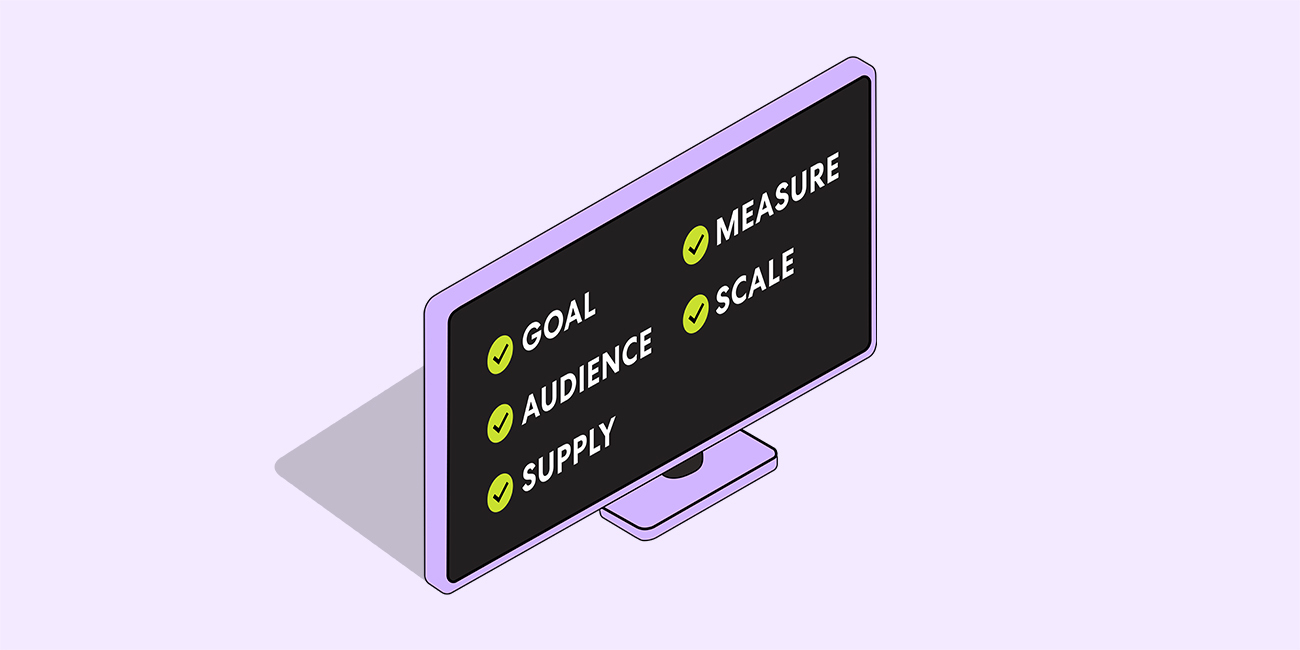
- If you’ve run digital campaigns, you already know how to run a CTV campaign. Launching your first campaign takes five steps: pick a goal, target high-value customers, choose premium supply, measure the outcome, and scale what’s working.
- Yahoo DSP pairs premium streaming supply with first-party data from 213M logged-in U.S. users2. Yahoo Blueprint Performance optimizes toward your goal in real time, and Yahoo ConnectID offers omnichannel measurement.
Streaming TV isn't just for big brands anymore. U.S. advertisers will spend an estimated $37.95 billion on connected TV (CTV) this year¹, and a growing share of that money comes from brands that grew up on search and social: direct-to-consumer (DTC) and e-commerce companies. These are the same brands that measure every dollar against a sale. Historically, TV advertising has been seen as an awareness play, but for many of these brands, that mentality is quickly ending.
The components that built your advertising strategy - sharp audiences, clear KPIs, and constant testing - are the same ones that make CTV work. What's different is the screen, the supply, and the measurement. That's where a demand-side platform (DSP) comes in.
So where do you start? Below are five simple steps for planning your CTV campaign, followed by how to get up and running with Yahoo DSP.
As with any campaign, you start by defining what success looks like for your CTV one. For most brands, the objective falls into one of these buckets:
In Yahoo DSP you choose your goal and get your campaign live. From there, Yahoo Blueprint Performance, our AI optimization engine, continuously adjusts toward that goal in real time, so you don't have to manually babysit bids or check dashboards every day just to keep the campaign on track.
Unlike traditional TV that is transacted on demographics or channels, CTV allows advertisers to purchase very specific groups of individuals across a variety of different publishers. This means that you can define your exact target audience and reach them efficiently, avoiding wasted impressions and unnecessary costs. These scalable audiences are built on things like known interests, traits, and actual online activity, offering unmatched precision.
A DSP with a strong data footprint can turn it into ready-to-use targeting segments or even let advertisers create customized audiences. It will also be able to ingest and surface any data you possess, such as customer lists or site visitors, for retargeting or further modeling. This opens up several potential strategies:
None of this works if you can't recognize the household on the other side of the screen. Our identity backbone is built on a base of 213M logged-in US users, so you can feel confident that you’re reaching the right user on any screen. Yahoo DSP also has a wealth of first-party audience data from direct consumer relationships across Yahoo's own digital properties and partners that you can put to work for CTV targeting. Find your consumers based on recent searches or purchases, the content they consume, and other signals available to Yahoo DSP. You can also create custom audiences to meet your campaign's specific needs and use them across channels.
Premium CTV inventory enables you to find your audience where they truly spend their time, while keeping your ad in a brand-safe environment. These are the shows and networks where viewers are engaged and attentive to advertising.
The Yahoo DSP supply is built from premium publishers: major ad-supported streaming apps and networks with live sports, prestige shows, and appointment viewing, where viewer attention is higher. Pairing that with the unique first-party data Yahoo DSP offers gives you a powerful combination — connecting meaningfully with your high-value audiences while they’re watching their favorite shows.
Measurement is one of CTV’s biggest advantages over traditional TV. With strong identity signals, you can track the same KPIs you’re used to from digital campaigns, including lower-funnel outcomes like site visits, signups, and sales. This can be done through tools like pixels or conversion APIs, which can also help optimize campaign performance over time.
At Yahoo DSP, one-click pixel activation is available, and we offer holistic, omnichannel measurement across devices. For example, if a viewer sees your ad on CTV and buys the product on their phone, Yahoo DSP uses its ConnectID to tie that purchase back to the CTV ad, properly assessing your marketing.
Once your first flight has a baseline, go from there:
Ready to launch your first CTV campaign? See how Yahoo DSP can help.
¹ eMarketer, December 2025 forecast, U.S. connected TV ad spending, 2026.
2 Yahoo Internal Data, Q1 2026.

