

What Happens When Anyone Can Build? Teams Erase the Technical Skills Gap
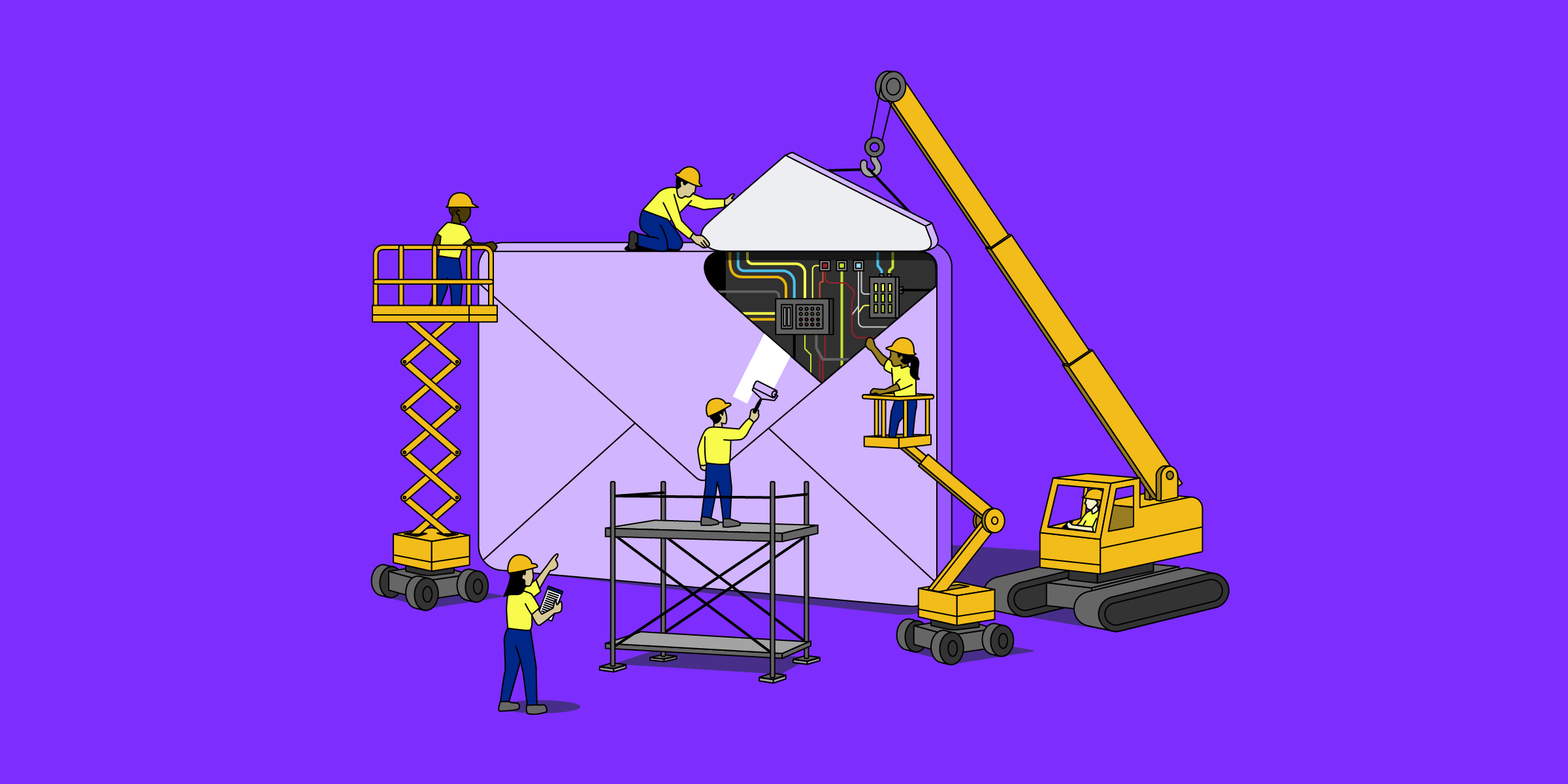
Traditionally, the boundaries of a product development squad were set by what each person couldn't do. A product lead couldn't stress-test a hunch without a developer’s custom script; an engineering manager might see the logic of a fix but lack the syntax to code it. Everyone had a lane, and if your idea fell outside that lane, you waited. But as AI democratizes technical execution, forward-thinking teams are erasing those lanes. The Yahoo Mail team is a prime example: It built Planner, a new AI-powered productivity hub, in large part by expanding the definition of what each person could do.
An engineering manager built a critical debugging application in a language she didn't even know, turning a personal skill gap into a vital team resource. Meanwhile, a semi-technical content analytics team used AI to clear a major testing bottleneck.
The result wasn’t just shipping a better feature. It was one more step toward redefining how cross-functional groups can build products together. As AI closes the technical skills gaps that have long dictated who can build what, individuals are no longer defined by the limits of their primary role.
"Traditionally, people get confined to a single lane because of their job description or their specific skill set,” says Matt Sanchez, COO of Yahoo. “But because we’re removing those barriers with AI, our teams can focus on continuous problem-solving rather than worrying about the underlying tech stack. When people realize they can take an idea straight to production without being bottlenecked by resources, it triggers a massive wave of creativity across the organization."
An experiment that became the standard
In the weeks leading up to the launch of Planner, the Mail team ran into a frustrating problem: whenever they discovered a bug during testing, it was hard to tell exactly where it was coming from. Because the new feature relied on data passing seamlessly between Mail calendars, the Mail mobile apps, and the underlying AI, tracking down a single pipeline error required hours of grueling, live troubleshooting sessions. "We were spending hours debugging every single error that surfaced and ensuring a consistent experience for users,” says Alisha Arora, Senior Manager, Software Dev Engineering.
.png)
Arora had a clear vision for an internal debugging application that could pinpoint root causes, but as a career backend engineer, she was limited by her own technical lane. "I have absolutely no experience on the front end, and wasn’t familiar with that tech stack," she says. Historically, bringing her idea to life meant navigating a long loop of team buy-in, allocation of resources, and borrowing scarce front-end developers.
Instead, she opened Cursor, an AI-powered code editor, to see if she could bridge the gap herself. "It was just a thought—maybe I should try," Arora says. Feeding the AI basic text prompts with her backend logic, the tool rapidly spun up functional user interfaces and even guided her through production deployment protocols she had never used.
What started as a quick experiment ultimately was recognized at an internal hackathon and became the operational standard for the Planner rollout. It automated widespread internal testing and gave product managers the data visibility required for final launch approval.
"The experience made me realize I don't have to be bottlenecked now with the lack of skill, and if I have ideas, I don't have to wait," Arora says. "I can actually take creativity to production."
If I have ideas, I don’t have to wait. I can actually take creativity to production.
A new way to test and learn
The democratization of building extended to the Content Analysis and Knowledge Engineering (CAKE) team, whose data-extraction rules taught Planner how to interpret emails and sync them to a user's calendar.
Before launch, the team needed to stress-test these rules against unique, personal messages, like a mock parent-teacher conference email. But available templates were limited to mock, mass commercial emails, leaving a data vacuum for low-scale communications. While analysts regularly wrote parsing rules, they lacked the full-stack background required to build complex web code from scratch.
"In the past, we were unable to generate unique, personal emails, so we had limited ways of testing,” says Manju Prasad, Senior Manager for Content Analysis and Knowledge Engineering.
This time, the team used several prominent LLMs to build hundreds of mock email templates to simulate complex edge cases. Analysts directly prompted the AI to instantly generate clean email code mimicking real-world messages. This allowed them to simulate sophisticated data-extraction challenges on the fly, such as tracking a shipping notice with vague, relative timelines like a package arriving "this week."
Feeding these hyper-specific scenarios into the testing pipeline directly improved Planner’s reliability, ensuring the underlying models could accurately parse a user's schedule. "Now with prompting, we are able to scale it much faster,” Prasad says.
The CAKE team's breakthrough with Planner was part of a wider operational shift. They are also embedding AI deep into their day-to-day data engineering to:
- Automate extraction rules. Writing code to pull key details from emails used to require manual scripting for every minor layout change. Now, AI builds reusable master templates that automatically pre-fill standard data variables, leaving analysts to code only the tiny visual gaps where an email actually fluctuates.
- Streamline product labeling. For massive data-categorization projects, AI handles the heavy lifting of mapping taxonomy. This shifts human energy from tedious manual logging to high-level spot-checking backed by internal AI search assistants.
As skills gaps disappear, the biggest question remaining is how much initiative each team member brings.
"When technical barriers are lowered, personal agency becomes the true differentiator," Sanchez says. "It stops being a question of can you build it and becomes a question of will you build it. You just need the mentality to go solve the problem, because the tools make it completely possible."
Key takeaways
Elevate talent from syntax to strategy. By abstracting technical constraints behind AI prompts, team members regardless of their core stack can build end-to-end. This minimizes repetitive manual execution, shifting human focus away from tedious troubleshooting toward high-level architecture and creative problem-solving.
Feed the ML engine by simulating edge cases. Advanced machine learning models are inherently limited by a lack of real-world training data for low-frequency user behaviors. Prompting AI to instantly generate realistic mock data eliminates tedious manual scripting, accelerating the model training and validation pipelines required for launch.
Decouple testing from client-side dependencies. Product velocity stalls when backend logic cannot be fully audited before frontend user interfaces are deployed. Rapidly spinning up independent, AI-generated debugging applications allows engineering squads to run isolated data quality checks, swapping live alignment sessions for swift, asynchronous validation.